


Breast augmentation and lift with implants
A breast augmentation and lift, known clinically as an augmentation-mastopexy, is a comprehensive procedure designed to simultaneously address both loss of volume and skin laxity.
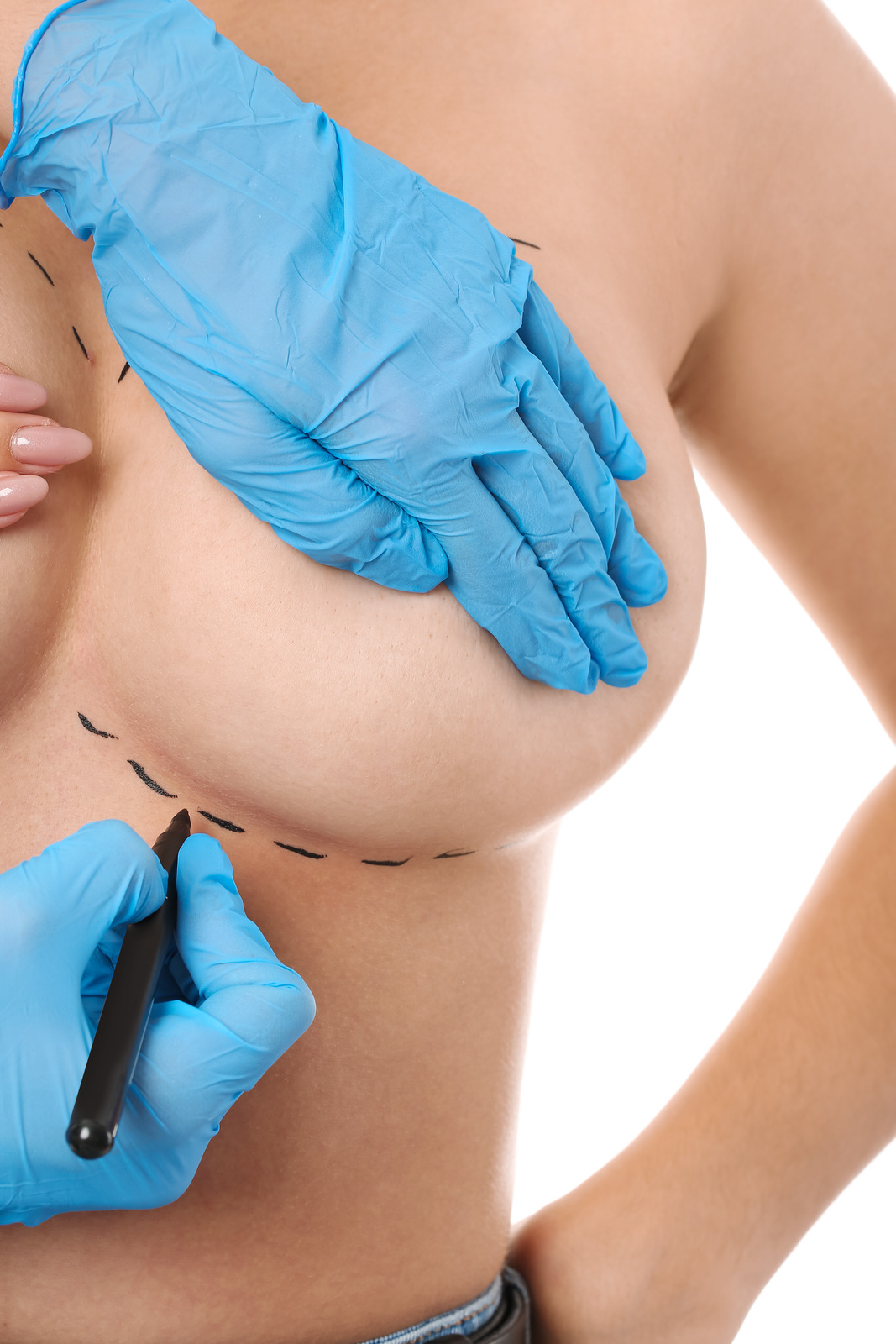
Breast augmentation and lift with implants
A breast augmentation and lift, known clinically as an augmentation-mastopexy, is a comprehensive procedure designed to simultaneously address both loss of volume and skin laxity. By combining the placement of implants with the removal of excess skin, this surgery restores a youthful elevation while providing the fullness and projection that a lift alone cannot achieve. This dual approach is ideal for women seeking a total rejuvenation of the breast contour and silhouette.
For many women, the concerns they have about their breasts are twofold: a lack of volume (deflation) and a downward shift in position (ptosis). This often occurs following pregnancy, breastfeeding, or significant weight loss, where the skin has been stretched beyond its ability to snap back. A breast augmentation and lift is a specialized procedure that addresses these concerns in a single operation, creating a result that is both firmer and fuller.
What is an Augmentation-Mastopexy?
This procedure combines the technical elements of two distinct surgeries. The "lift" component involves removing redundant skin and repositioning the nipple-areolar complex to a more aesthetic, higher point on the breast mound. The "augmentation" component involves the surgical insertion of silicone or saline implants to restore the "upper pole" fullness and cleavage that a lift by itself often lacks.
Executing these two procedures together requires a high degree of surgical skill. The surgeon must carefully calculate the weight of the chosen implant to ensure it does not place undue tension on the newly lifted tissues. The goal is to create a stable, long-lasting result where the implant provides the foundation and the lift provides the refined shape.
Who is this procedure for?
This combination surgery is specifically designed for women who find that a simple augmentation would leave their breasts looking "heavy" or sagging, or that a lift alone would leave them feeling too small. You may be a candidate for an augmentation and lift if:
- Your breasts have both lost volume and begun to sag significantly.
- Your nipples sit at or below the level of the under-breast crease.
- You wish to increase your cup size while also correcting a drooping appearance.
- You have "empty" skin at the top of the breast but still desire a lifted, youthful profile.
- You want to achieve the most dramatic improvement possible in a single surgical session.
Before the operation
Your journey begins with a detailed physical assessment and consultation. Your surgeon will measure the degree of breast ptosis and evaluate your skin elasticity to determine if you are a candidate for a combined procedure. We will discuss implant options—including size, shape, and texture—alongside the specific lift incision pattern (such as the lollipop or anchor technique) that will best suit your anatomy.
Preoperative instructions are critical for this procedure. You will be asked to maintain a stable weight, stop smoking at least six weeks prior to surgery to ensure proper skin healing, and avoid medications that thin the blood. Detailed imaging and "sizing" help ensure that the chosen implants will complement the new, lifted shape of your breasts.
During the operation
The surgery is performed under general anesthesia and typically takes between 3 and 5 hours, depending on the complexity of the lift. The surgeon first creates the incisions required for the lift and prepares the "pocket" for the implant, which is usually placed beneath the chest muscle for added support and a more natural transition.
After the implants are securely positioned and symmetry is confirmed, the surgeon removes the excess skin and reshapes the breast tissue around the implant. The nipples are repositioned to their new height, and the incisions are meticulously closed with deep, dissolvable sutures to provide internal strength, followed by fine surface sutures to minimize scarring.
After the operation and recovery
Post-operative care is vital, as the tissues are supporting both the new implant and the reshaped skin. You will wear a surgical support bra immediately to minimize tension on the incision lines. Swelling and bruising are expected and will gradually subside over the first few weeks. Most patients can return to light activity and sedentary work within 10 to 14 days.
It is essential to avoid any strenuous upper-body exercise or heavy lifting for at least 6 to 8 weeks to prevent the implants from shifting or the incisions from widening. While the initial result is visible quickly, the breasts will "settle" into their final, soft position over the course of 3 to 6 months.
Why not just get a larger implant to fill the loose skin?
Using a very large implant to "fill out" sagging skin is generally not recommended. The weight of a large implant can actually worsen sagging over time by further stretching the skin. A lift removes the excess skin first, allowing a more appropriately sized implant to provide a beautiful, supported result that will last much longer.
Where will the scars be?
Because this is a combined procedure, the scarring will reflect the lift technique used. Most commonly, this involves a "lollipop" scar (around the nipple and down to the crease) or an "anchor" scar (which adds a horizontal line in the breast fold). While these scars are more extensive than a simple augmentation, they are placed to be hidden by bras and swimwear and fade significantly with proper aftercare.
Will I lose nipple sensation?
Temporary changes in sensation are common as the nerves heal from the repositioning of the nipple. While permanent loss of sensation is a risk with any breast surgery involving a lift, surgeons use advanced techniques to keep the nipple attached to its original nerve and blood supply, which helps preserve sensation in the majority of cases.
Can I have this done after having children?
Yes, this is one of the most common procedures for women who have completed their families. It specifically addresses the "deflated" and stretched appearance that often follows pregnancy and breastfeeding. It is generally recommended to wait at least six months after you have finished breastfeeding before undergoing this surgery to allow the breast tissue to stabilize.
Every question gets an answer
Get a free consultation by booking a consultation with our consultants.